What to Know About Spondylosis
What does Spondylosis mean?
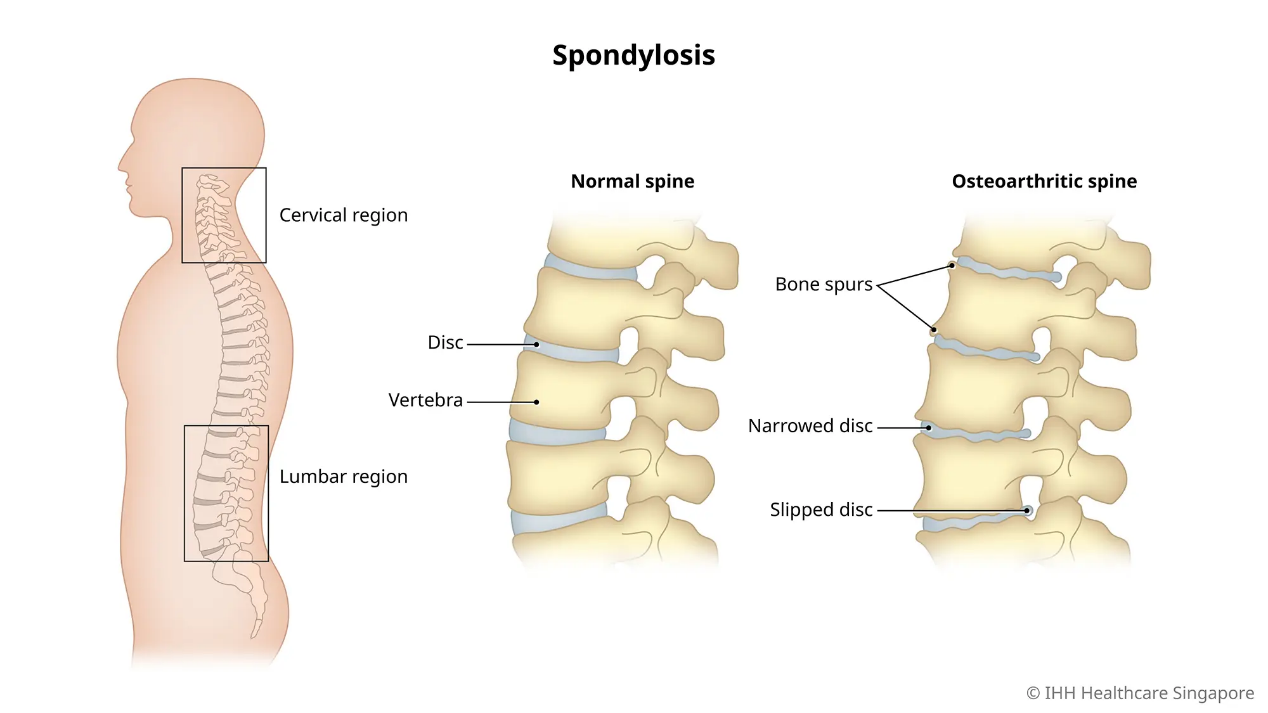
Despite the peculiar name it’s given, Spondylosis is simply osteoarthritis in the spine or what can also be called “normal aging changes.” This is a relatively common diagnosis, especially in the neck and low back. Because this is an age-related phenomena, spondylosis is much more common in older individuals, with up to 80% of adults over 40 having the diagnosis. However, you can have the diagnosis at a much earlier age as well.
So what are these so-called “normal aging changes” involved in Spondylosis?
Absolutely all of us have normal wear-and-tear in our joints as we age and the spine is no different. These changes include degeneration of the disc, or “cushions,” between the vertebrae which can eventually lead to boney changes of the vertebral bodies. There are many contributing factors as to when you may have this diagnosis including your lifestyle, posture, and even genetic/hereditary components. Typically, this diagnosis is given after X-rays are taken and the individual has started having pain in their neck or low back, as well as reduced range of motion. The most common type of spondylosis is in the cervical spine, or neck, and the second most common is in the lumbar spine, or low back.
How can Physical Therapy help to treat Spondylosis?
A Doctor of Physical Therapy can address your Spondylosis diagnosis in various ways. Manual therapy, prescribed strengthening and stretching exercises can help you to regain as much range of motion as possible, as well as decrease the stress on the joints. Physical Therapy can also help you achieve optimal posture and lifestyle changes that will help to decrease the progression of Spondylosis and keep you pain-free for as long as possible.
Now.. what are spondylolysis and spondylolisthesis?
Despite the nuanced difference in spelling, these are very different pathologies from Spondylosis. Spondylolysis is a fracture in the portion of the back of the spine called the “pars interarticularis.” When this type of fracture occurs on both sides of the spine, the affected vertebrae can potentially slip forward in position in the spine. If this forward slippage occurs then the condition is called Spondylolisthesis. It is important to understand the difference in these terms and that if you are diagnosed with Spondylosis, you DO NOT have a fracture, but rather arthritis and some degenerative changes.
Google trend terms: lumbar spondylosis, cervical spondylosis, mild spondylosis, mild lumbar spondylosis, spondylosis vs spondylolysis vs spondylolisthesis, thoracolumbar spondylosis
BY: Live To Move
Other
COMMENTS: No Comments